Computation
This area includes the computational side of my work: automation, data processing, scientific machine learning, and computer vision for microscopy and assay-based datasets.
About
I recently completed my PhD in Chemistry at Boston University, but my interest in this field started much earlier. When I was in middle school, I came across articles on nanomaterials and became fascinated by the idea that matter at the nanoscale could behave in ways that felt both precise and surprising. That early curiosity led me to study chemistry at Purdue University, where I joined Professor Shelley A. Claridge's group and began undergraduate research on ultranarrow gold nanowires assembled on two-dimensional material templates. I later joined Professor Bjoern M. Reinhard's group at Boston University, where my research expanded toward lipid-coated plasmonic nanomaterials, excitation transfer in plasmonic nanoparticles, and biologically relevant applications such as viral inactivation.
A major turning point came during the excitation transfer project, when the scale of the data pushed me to start coding more seriously. What began as a practical need for batch processing in MATLAB gradually became a deeper interest in automation, computation, and machine learning. I started building tools to process microscopy and spectroscopy data more efficiently, and later explored whether computer vision could help identify very small nanoparticles in noisy cellular environments. That experience shaped how I now think about my work: I am most interested in using AI not as an abstract technology, but as a practical way to make scientific discovery faster, more scalable, and more insightful.
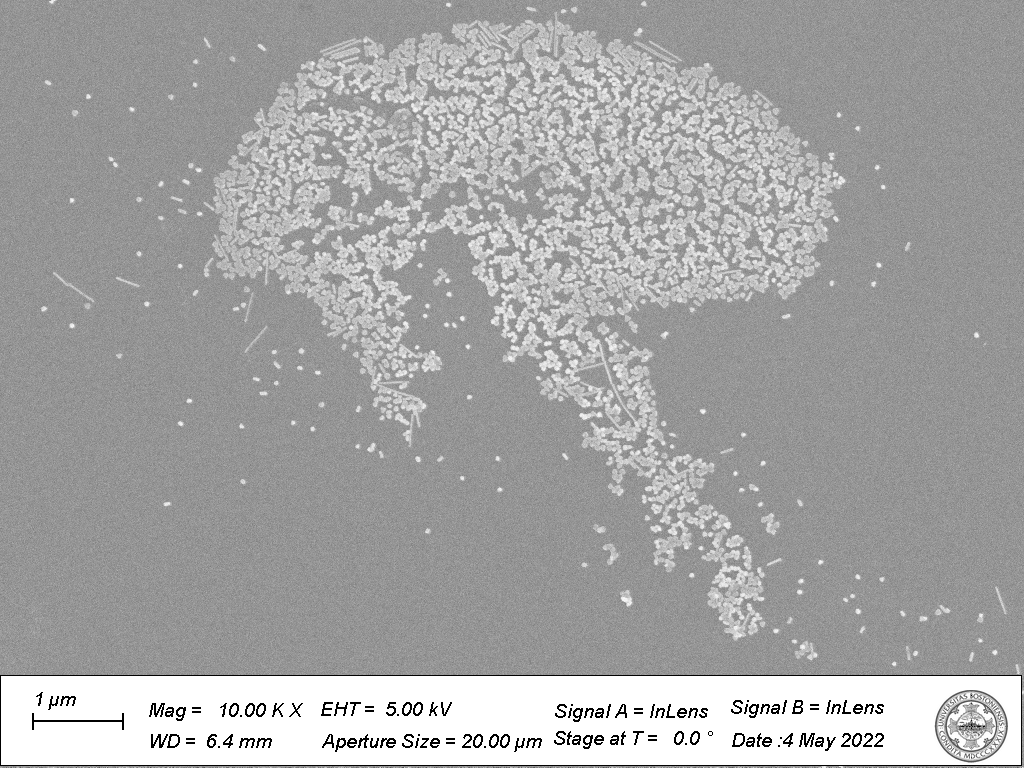
Outside of science, I enjoy watching baseball and soccer, cooking, exploring good food, and spending time learning about wine and whiskey.
My work can be organized into three connected areas. At this point, I think of them less as separate topics and more as the main directions that shape the projects on this site.
This area includes the computational side of my work: automation, data processing, scientific machine learning, and computer vision for microscopy and assay-based datasets.
This area covers nanomaterials, plasmonic hybrid systems, microscopy, spectroscopy, and the structure-property questions that shaped much of my experimental training.
This area brings the work into biologically and therapeutically relevant settings, including protein interactions, lipid-based systems, assay logic, viral inactivation, and broader LNP-relevant questions.
The projects on this site reflect how these areas actually interact in my work. Computation gives me a way to structure and interpret complex data, physical systems provide the measurable platform, and bioapplication connects the work to questions that matter in biotechnology and therapeutic settings. I do not think of these as separate tracks, but as different layers of the same problem-solving approach. The Projects page shows how that looks in practice, and the Publications page shows the formal research outputs that came from it.