Physical Systems
Plasmonic Excitation Transfer and Computational Analysis
A project centered on plasmonic metal-semiconductor hybrid nanostructures, single-particle line-shape analysis, electromagnetic simulations, and computation-heavy interpretation of optical spectroscopy data.
View the full workflow, scripts, and supporting materials for this project on GitHub.
Overview
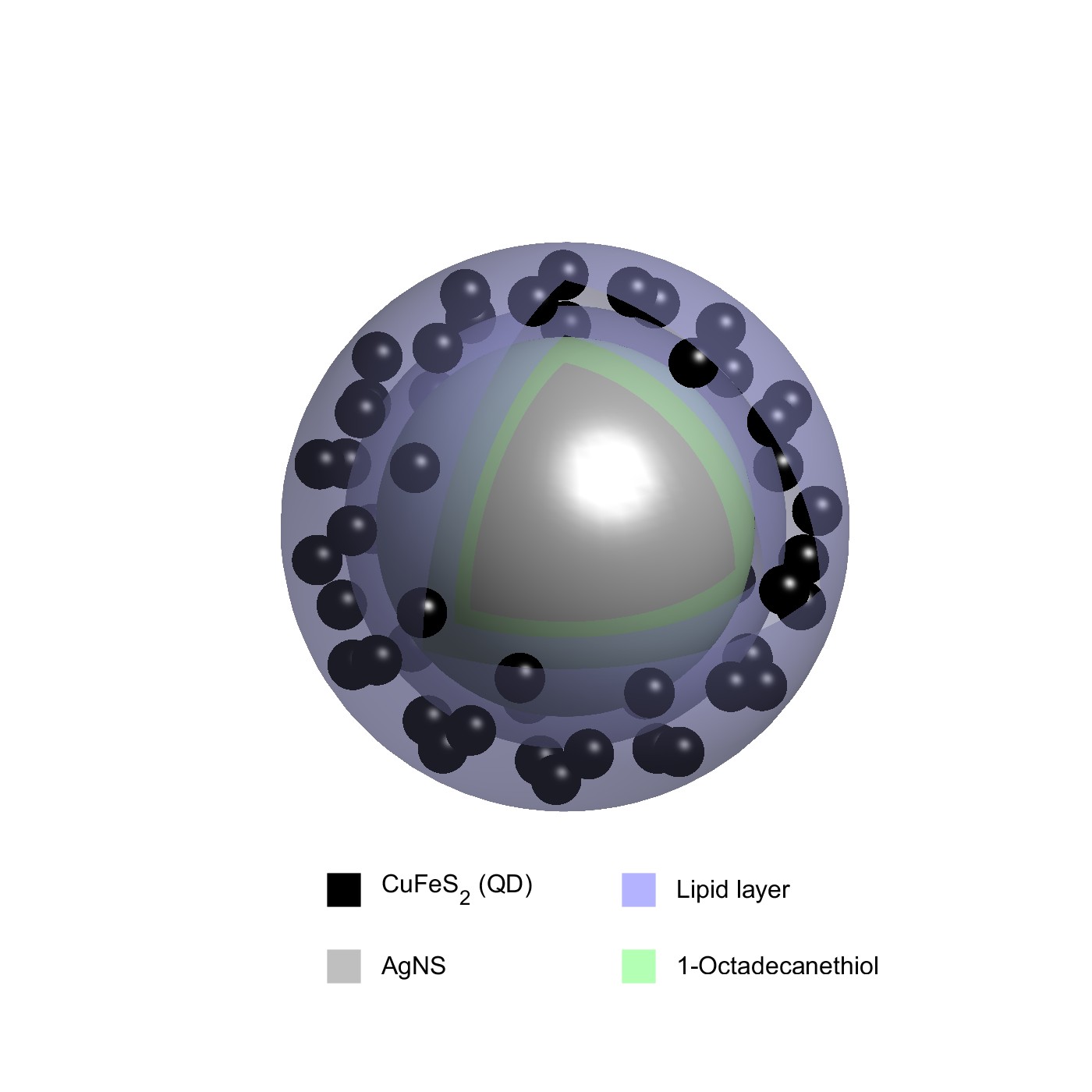
This project focused on direct excitation transfer in plasmonic metal-semiconductor hybrids built from silver nanoparticles and chalcopyrite (CuFeS2) nanocrystals embedded in a lipid coating. The scientific question was whether resonant coupling between the metallic and semiconductor building blocks could be detected through changes in single-particle scattering line shapes, and what those changes revealed about charge and energy transfer mechanisms in the hybrid structure.
What made the project especially formative for me was that it required more than careful experimentation. The answer depended on combining single-particle spectroscopy, quantitative line-width analysis, electromagnetic simulations, and structured data handling. It was one of the clearest moments in my training where computation stopped being a convenience and became essential to making the science interpretable.
What I Worked On
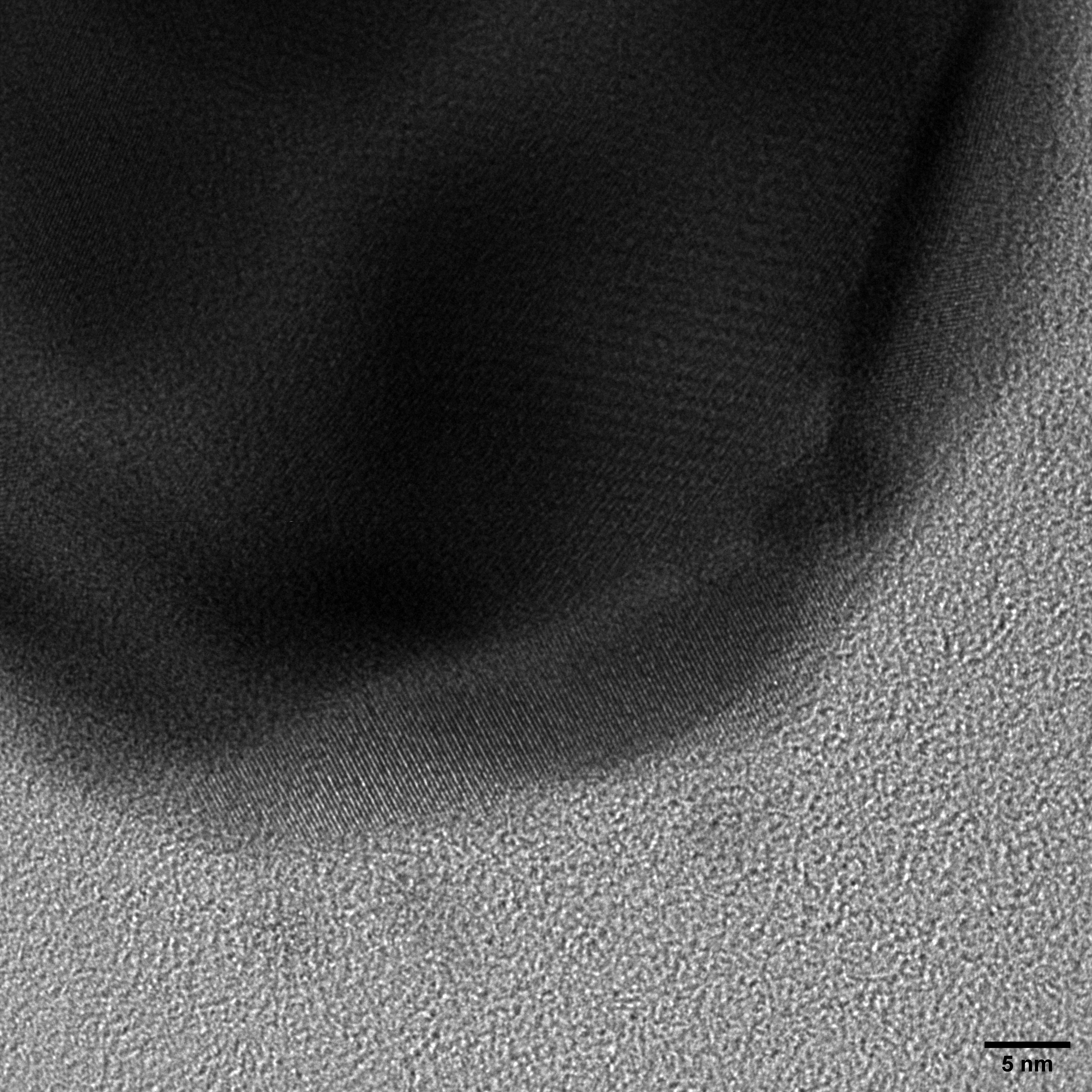
- Worked on AgNP@CuFeS2 hybrid nanostructures designed to place semiconductor nanocrystals in the evanescent field of a plasmonic silver nanoparticle core.
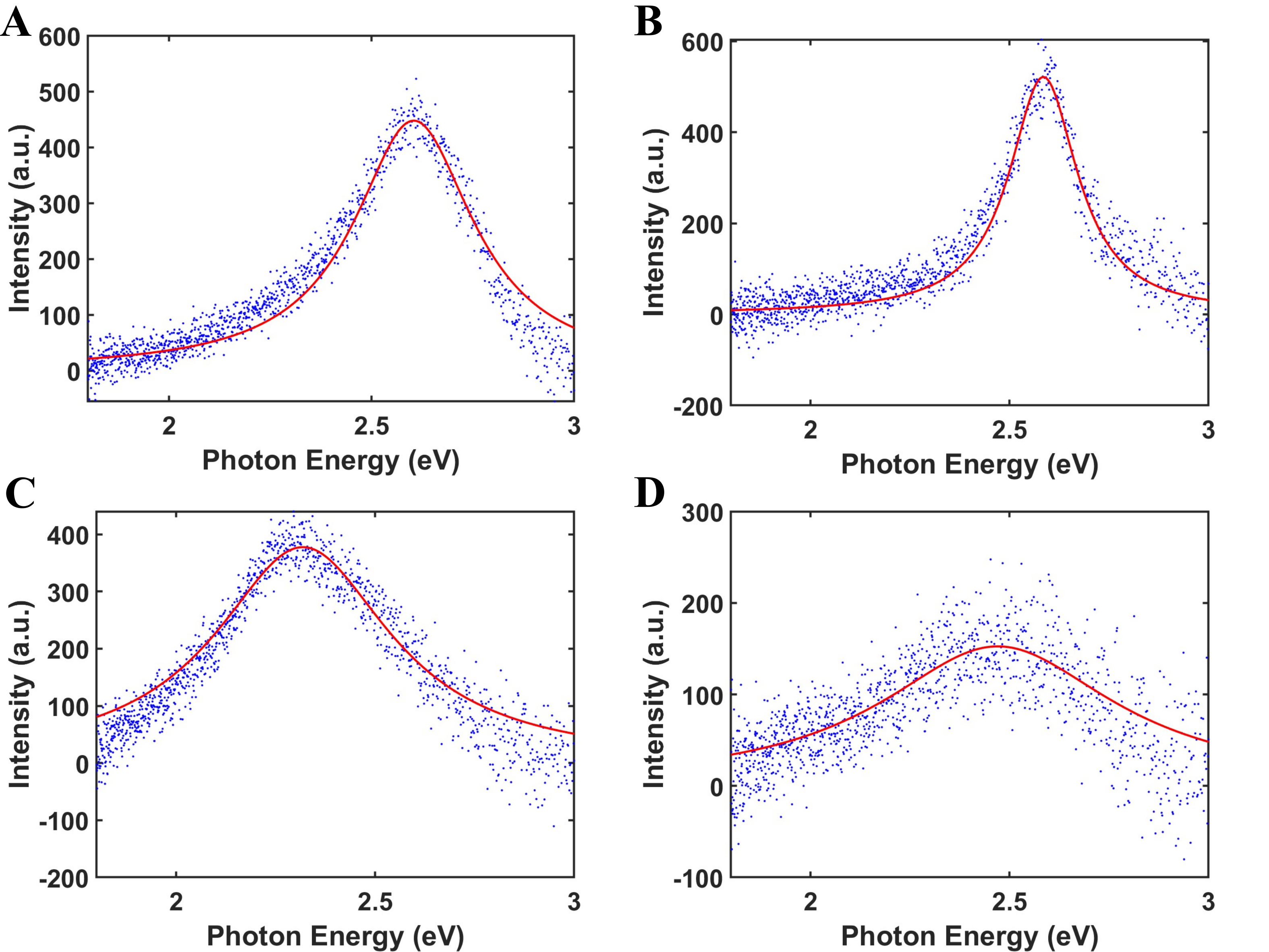
- Performed and analyzed single-particle scattering measurements to quantify resonance shifts and line-shape broadening.
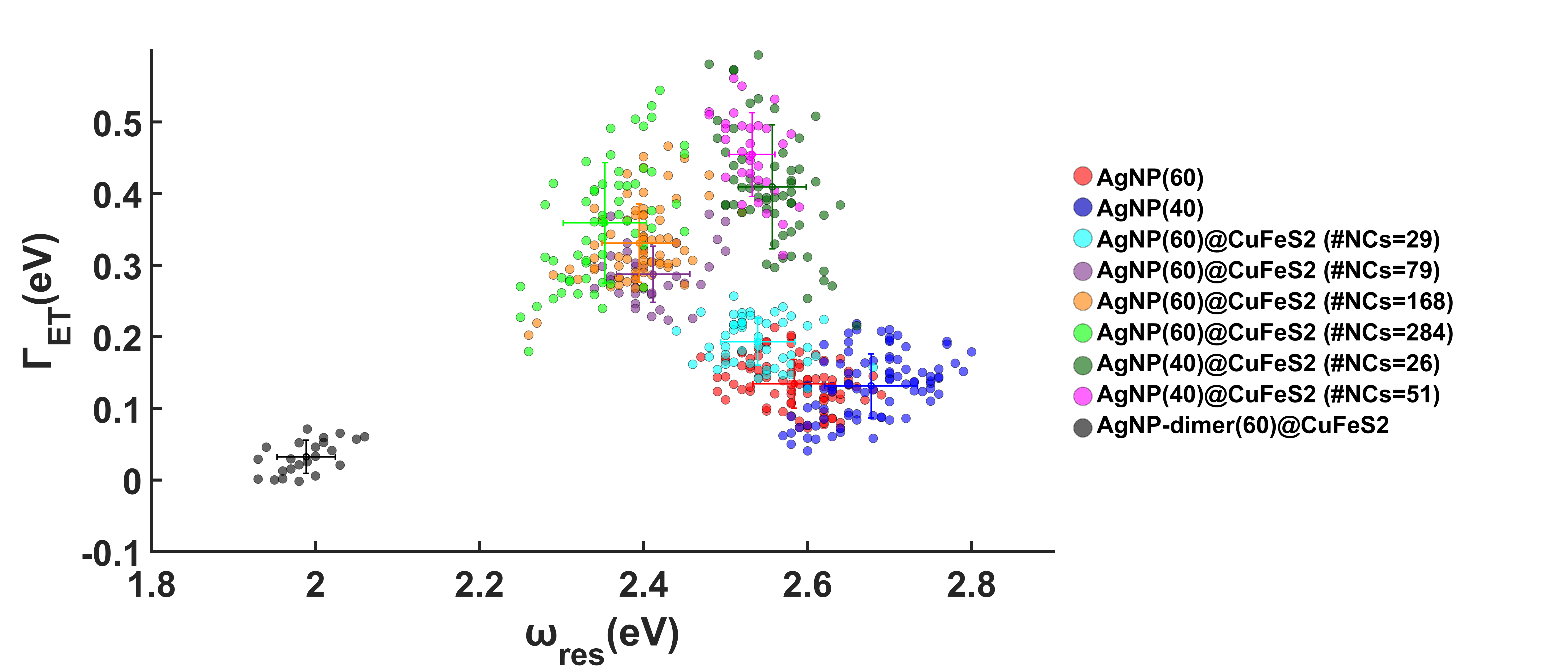
- Used line-width decomposition to separate contributions from bulk damping, interband damping, surface scattering, radiation damping, and excitation-transfer-related damping.
- Integrated supporting electromagnetic simulations to test how energetic overlap and hybrid geometry influenced the observed spectral behavior.
- Built data-processing workflows for fitting, filtering, and comparing many individual particle spectra under multiple loading and control conditions.
Computation and Data Interpretation
This project is also one of the strongest examples of my computational development. The central claim of the paper depended on being able to move from raw optical measurements to a physically meaningful damping analysis across many single-particle spectra. That required reproducible fitting logic, careful comparison against controls, and a structured way to connect experiment with simulation rather than treating either one in isolation.
In practice, this meant building an analysis workflow that could handle Lorentzian fitting, outlier filtering, parameter extraction, comparison across nanoparticle sizes and loadings, and interpretation of the excitation-transfer term in the context of electromagnetic modeling. This project therefore sits at the intersection of experimental spectroscopy, computational analysis, and physics-informed reasoning.
Why It Matters
- The project provided evidence for direct resonant energy transfer in a hybrid architecture where both building blocks support visible resonances.
- It showed how single-particle line-shape analysis can be used as a sensitive tool for identifying interfacial excitation-transfer effects.
- For me personally, it was a turning point toward computation-heavy research, because the scientific conclusion depended on data processing and simulation as much as on the experiment itself.